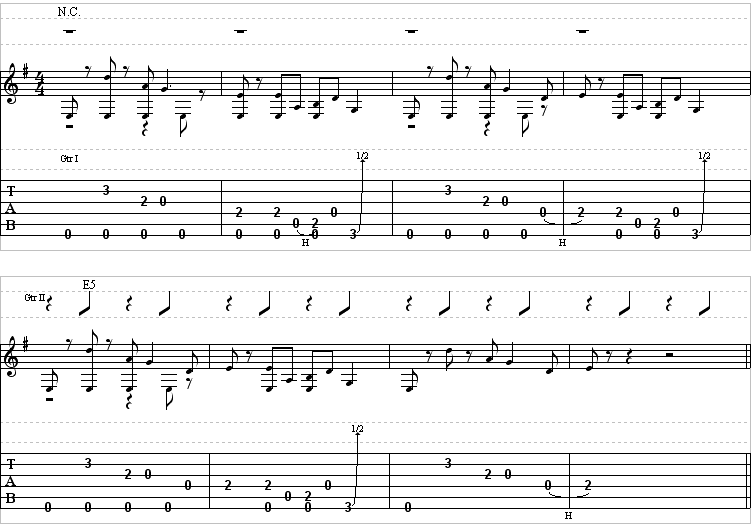
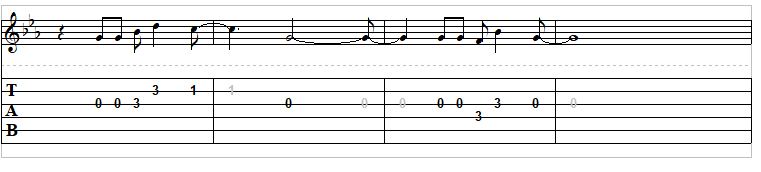
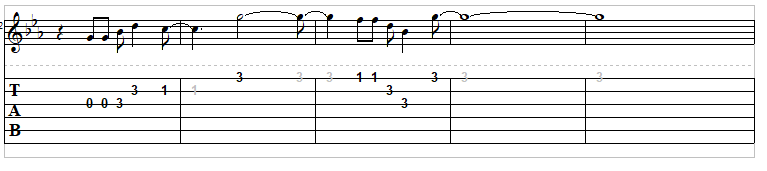
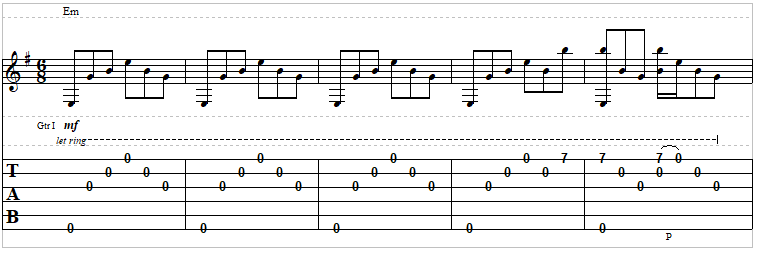
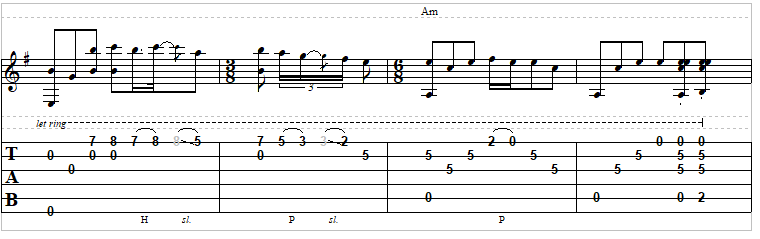
Another Lonely Day- Ben Harper

The riff itself isn’t difficult to play, but the moving chord arrangements are a little trickier. In this riff, you will need to know how to play a C chord, an Am chord, an Em chord, and finally a G chord. If you know how to play those, you can struggle through by just playing them in that order. What makes the riff interesting, though, is how he incorporates the chords into his strumming patterns. Notice that you will begin by placing a C chord, and then transitioning into the Am chord by walking the fret with your 2nd finger on the second fret on the “A” string. Notice that once you go into the Am chord, you will immediately let off of it and play the same strings open. You will do this a few times. As far as the timing, the only thing that may throw you off a little is the transitional phrasings from C to Am. Just think like it is a Bob Marley song, and allow your fingers to flow. After you have played the Am chord and transitioned into the Em chord, notice that you are not playing the typical G chord that you may have learned before. The note that you are playing is the root G note. That would be on the third fret on the “low E” string. Practice this song over and over, and you will hear how the chords are so simple, but add a great deal of depth to the overall sound.

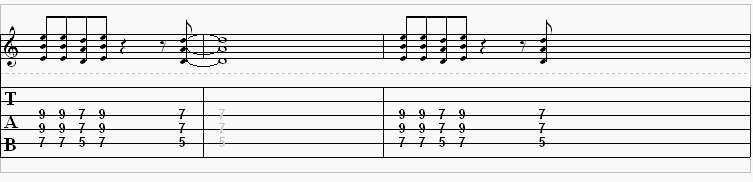
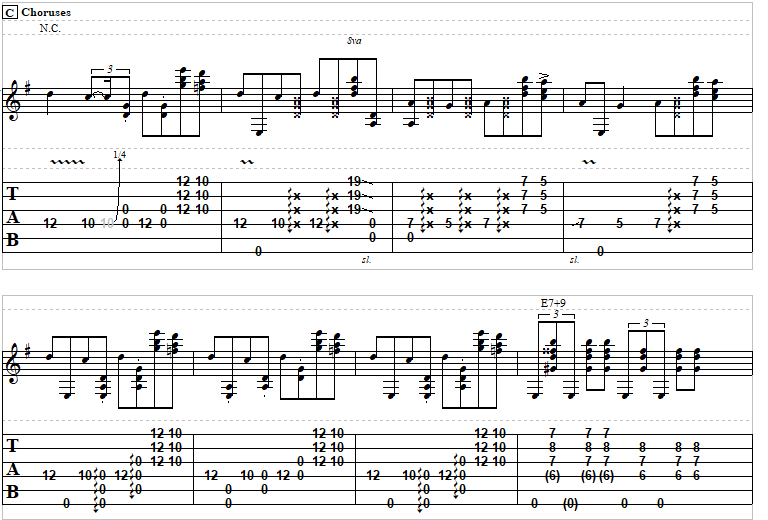
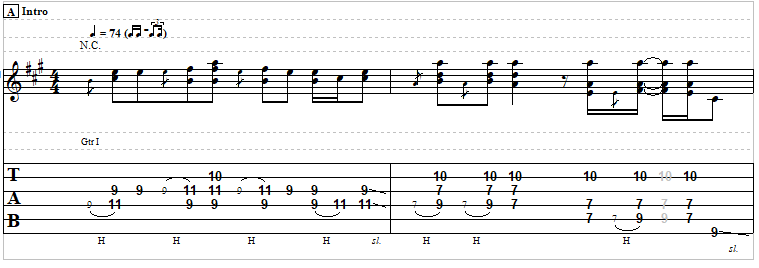
Wham- Lonnie Mack

You should have some fun with this intro. It isn’t difficult, and all based on barre chords, except for the very first measure.

Here’s what it sounds like looped at the normal tempo of 120 bpm:

Stairway To Heaven Part 2

In this lesson, we’ll learn the 2nd half of the intro riff that we started in our previous lesson.

If you had trouble with the previous lesson, rest assured, the two measures from this half are actually easier than the previous 2 measures. That’s good news, right?

In the first measure. we’ll be forming a Fmaj7 chord. Use your 3rd finger on the 3rd fret of the D, 2nd finger for the 2nd fret of the G, and 1st finger for the 1st fret of the B string. The high E will be picked open. This chord formation lasts the entire measure, too. The picking pattern is slightly different, too.